
Best time to visit the Maasai Mara: a month-by-month guide
The Mara is good all year, but every month is different. Here's what January to December really looks like for migration, rain, crowds and value.
There's no bad month in the Maasai Mara, only different trade-offs. For the wildebeest migration, go between July and October, when river crossings are most often seen in August and September. For quiet game drives and good value, January to March is hard to beat. For the lowest rates, travel in April or May and accept some rain and mud. Kenyan families usually travel in the August and December school holidays, so book early for those weeks.
Below is how the year actually plays out, month by month, from the questions our Mombasa and Nairobi travellers ask us most. For the basics of the reserve itself, see our Maasai Mara destination guide.
How the Mara's year works
Four things shape every month in the Mara:
- Rain. There are two rainy seasons: the long rains, roughly April and May, and the short rains, roughly November. Neither means all-day rain. Expect afternoon storms, muddier tracks and greener grass.
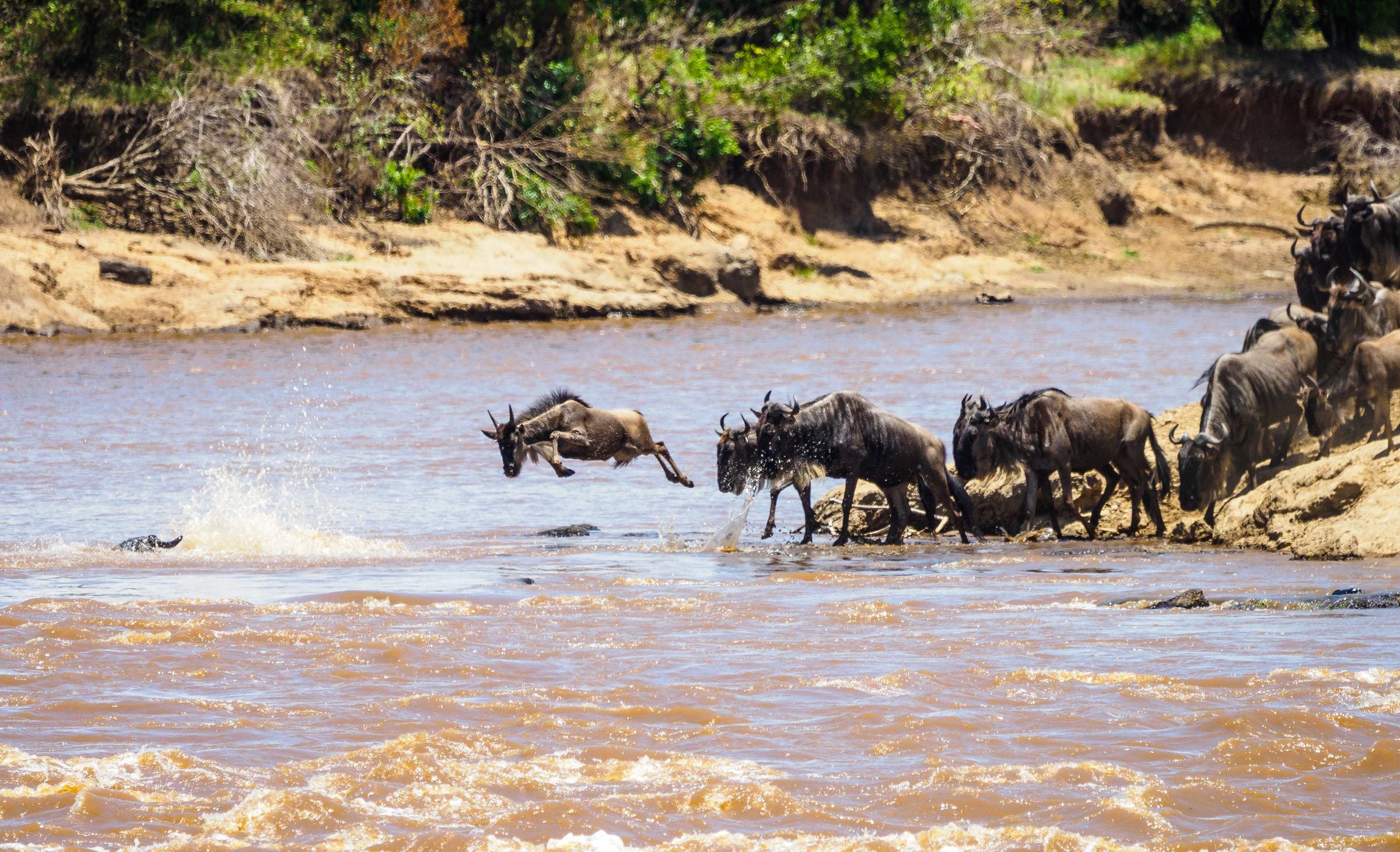
- The migration. The great herds of wildebeest and zebra spend most of the year in Tanzania's Serengeti and are usually in the Mara from about July to October.
- Reserve fees. Narok County charges lower reserve fees from January to June than from July to December. Fees are charged per person per day and paid cashless.
- Kenyan holidays. School breaks in April, August and November–December, plus Easter and Christmas, fill lodges with resident families.
Month by month
January and February: dry, green and quiet
After the short rains the plains are green, the grass is short and the weather is mostly dry and warm. The migration herds are far south in the Serengeti, where they calve, but the Mara's resident lions, cheetahs, leopards, elephants and plains game are all here. Once the New Year rush ends, vehicle numbers drop and lower low-season reserve fees apply. This is one of the best-value times for a serious predator safari.
March: the shoulder month
Conditions are usually still good in early March, with showers building towards the end of the month. Lodges begin to offer green-season rates. If Easter falls in March, as it does in 2027, expect a busy long weekend.
April and May: the long rains
This is the wettest stretch of the year. Heavy afternoon storms turn the Mara's black-cotton soil into thick mud, a few camps close, and some tracks become hard going. In return you get the lowest rates of the year, very few vehicles, lush scenery and excellent birding. If you're flexible and you don't mind a 4x4 wobble, it can be a wonderful time. If you're flying in from the coast, keep a spare day in case weather delays a flight.
June: the sweet spot
The rains ease, the grass is long and golden, and the herds are moving north through the Serengeti. In some years the first columns reach the Mara in late June. Reserve fees are still at the low-season level until the end of the month, and lodges are quieter than in July. June is also the start of Kenya's cool season, so pack warm layers for dawn drives.
July: the herds arrive
Most years the migration pours into the Mara during July, though it can be weeks early or late depending on rainfall in Tanzania. The first river crossings can happen this month. High-season reserve fees apply from 1 July, and lodge rates climb too. Mornings are cold and the sightings are spectacular.
August and September: peak migration
This is the classic window for Mara River crossings, when thousands of wildebeest gather on the banks and suddenly plunge in, with crocodiles waiting. It's also the busiest time of the year, made busier in August by Kenyan school holidays and international visitors. Book lodges six to nine months ahead. Allow at least three nights, because crossings can take hours, or days, to happen. A stay in a conservancy gives you quieter sightings away from the river crowds.
Crossings follow the rain, not a calendar. Anyone who promises you a crossing on a particular date is guessing. The best thing you can do is give yourself time in the reserve.
October: the quieter end of the migration
Plenty of herds are usually still around in early October, and crossings in both directions are still possible, with noticeably fewer vehicles than in August. Towards the end of the month the herds often start drifting back south. For many photographers October is the best compromise.
November: short rains and good deals
The short rains arrive, most of the migration has returned to the Serengeti, and the plains turn green again. Resident wildlife is excellent and lodges are quiet, though high-season reserve fees still apply until December. If your children's school holiday starts early, this can be a lovely family window.
December: festive season
The rains usually ease, the scenery is fresh, and Kenyan families head to the Mara for Christmas and New Year. Lodge rates peak over the festive weeks, and good rooms go months in advance. Early December is often calmer and better value than the days around Christmas.
Which month suits your trip?
- First safari, migration a must: August or September, booked early, with three or more nights.
- Photographers: October for crossings with fewer vehicles, or January–February for predators in soft light.
- Families on a budget: January–March or June, when lower reserve fees and green-season lodge rates overlap.
- Honeymooners: June, or September and October in a conservancy for privacy.
- Lowest price, flexible plans: April and May, accepting rain and a few closed camps.
Still deciding between parks? Our Maasai Mara vs Amboseli vs Tsavo comparison lays out the differences.
Planning from Mombasa or Diani
The Mara is a long way from the coast by road: two days each way via Nairobi, or a combination of the SGR to Nairobi and a road transfer. The quickest option is a scheduled light-aircraft flight from Mombasa or Ukunda (Diani), which takes roughly 2½–3 hours including stops. Fly-in trips make a two- or three-night safari realistic from the coast. Soft bags of around 15 kg are the norm on these planes.
- Pick your month using the guide above.
- Choose your base: inside the reserve for easy access to the river, or a conservancy for fewer vehicles.
- Decide fly-in or road based on time and budget.
- Bring your ID or residence permit if you're booking at Kenyan resident rates.
- Spread the cost: booking early lets you pay in instalments. See how Lipa Polepole works.
Tell us your dates and budget on Plan My Trip and we'll suggest the right month, camp and route from Mombasa or Nairobi.
Quick answers
What is the best month to visit the Maasai Mara?
For the wildebeest migration, August and September are the best months, as river crossings are most often seen then. For quieter game drives and good value, January and February are excellent, with dry weather and lower reserve fees. June is a sweet spot between the two, with low-season fees and the herds often beginning to arrive.
When do river crossings happen in the Maasai Mara?
River crossings usually happen between July and October, most often in August and September, when the migrating herds move back and forth across the Mara River. Timing depends on rainfall, so crossings can't be predicted to the day. Spending at least three nights in the reserve gives you the best chance of seeing one.
Is it worth visiting the Maasai Mara in the rainy season?
It can be. During the long rains in April and May, tracks get muddy and a few camps close, but rates drop, vehicles are few and the scenery is lush. Resident lions, cheetahs and elephants are still there. Choose an open camp with good access, and keep a spare day if you're flying in.
What is the cheapest time to visit the Maasai Mara?
April and May are usually the cheapest months, thanks to green-season lodge rates during the long rains. January to June also has lower Narok County reserve fees than July to December, so January–March and June offer good value with better weather. The festive season and August are the most expensive times.
Ready when you are
Turn this into a trip
Tell us your dates and we'll send options with prices — usually the same day.